Cash does not move in one direction. The day may begin with a float, bring in sales, include a refund, pay for an urgent purchase and end with money set aside for banking. Comparing sales with the final drawer count without those movements leaves an important part of the story out.
Make every movement part of the check
Know My Shop brings the opening cash, cash receipts, cash refunds, other cash introduced, payments, banking and closing cash into the daily reconciliation. Recording named payments gives a movement a reason you can recognise later. Reusable overhead headings help organise relevant expenses, while the payee remains a separate detail.
Here is an illustrative day. Begin with a £150 float. Receive £600 in cash sales, refund £20, pay out £35 and bank £500. With no other cash movements, the expected closing cash is £195. A count of £190 leaves a £5 difference to investigate. Those are cash figures, not a calculation of taxable sales or profit.
A bank deposit is a movement, not another cost
The £500 taken to the bank reduces the cash left in the shop. It does not become a new expense merely because the drawer is lighter. Keeping that distinction helps the daily check stay useful and avoids confusing cash handling with the cost of trading.
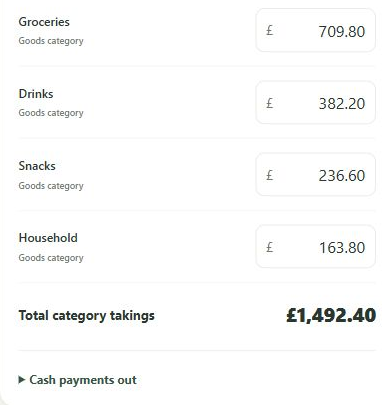
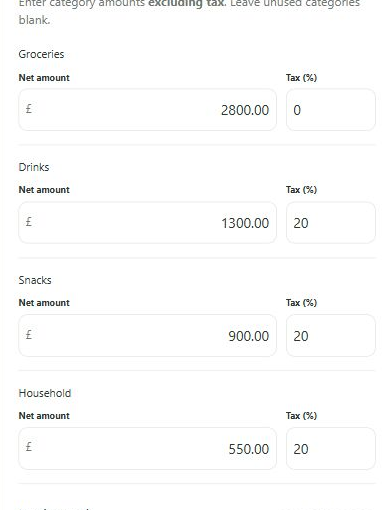
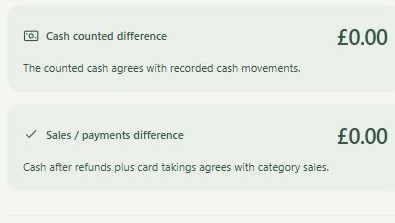
The app also compares the entered cash and card takings with category sales. That is a different check from counting the drawer: it asks whether the recorded payment totals agree with the recorded sales totals. You need both questions, because an internally balanced drawer can still sit alongside a mistyped category figure.
Use differences as a prompt, not a verdict
A difference might come from an omitted payment, an incorrect opening balance, a counting mistake or another unrecorded movement. The report cannot decide the cause by itself. A clear, dated record gives you a better starting point for checking the report and asking what happened while the day is still fresh.
Know My Shop does not automatically verify a deposit against your bank statement or provide a bank feed. Its value here is the discipline of recording what happened and showing how the entered figures reconcile. Shop-specific movements, such as third-party bill payments or cashback, need an agreed recording approach before the pilot is used for those activities.
A practical app for the person running the shop.
Keep your existing till. Use your own categories. Build your management picture from familiar daily totals.
See how Know My Shop worksWant a clearer picture of your own shop?
Keep your existing till and explore what category-level management information could do for your business.
Register your interest