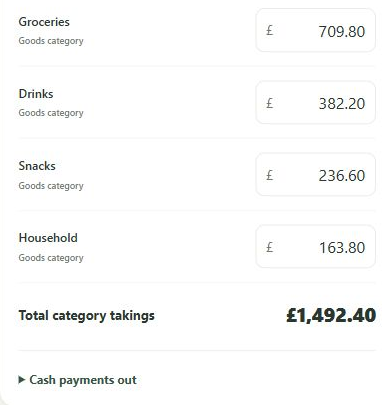
See what your shop earns, beyond what your till takes. That starts with a simple distinction: sales are the money coming in; gross profit is what remains after the cost of the goods sold. Gross profit then has to help cover rent, wages and the other costs of running the shop. A growing sales total can be welcome without telling you whether the business is becoming stronger.
The same takings can tell two different stories
Here is an illustrative comparison, with all figures excluding sales tax. A category selling £1,000 at a 15% gross margin contributes £150 of gross profit. Another selling £1,000 at a 40% gross margin contributes £400. Both put the same amount through the till, but they make different contributions towards the shop's running costs.
The right conclusion is not automatically to drop the lower-margin category. It might bring people through the door or support other purchases. The useful thing is to see the contribution clearly enough to ask the next question, rather than treating every pound of sales as equivalent.
Give your familiar categories a management purpose
Know My Shop uses the categories that mean something to you: groceries, drinks, snacks, household goods, or the divisions you already use in your till report. You enter the daily category totals and add margin assumptions as you are ready. You can then compare the parts of the business instead of relying on a single takings figure.
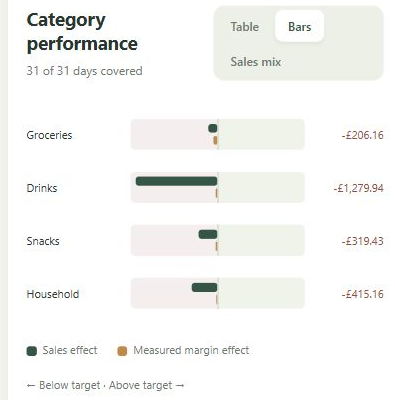
The basis of the figure matters. A margin applied to sales produces a gross-profit estimate; it does not independently measure the margin achieved. Recorded purchases and appropriately dated stock counts can support a count-adjusted view. Missing information should remain visible, because an incomplete figure is less useful when it looks complete.
Use the result to choose a practical next step
A category view can prompt a better supplier conversation, a review of discounts, or a closer look at the balance of products you sell. Looking daily helps you notice changes; reviewing a week or month helps you see whether they persist. The purpose is to make decisions with more context while there is still time to respond.
This remains management information, not a complete net-profit calculation or statutory accounts. Know My Shop does not establish the whole cost of running your business merely by applying category margins. It gives the owner a more informative place to begin.
A practical app for the person running the shop.
Keep your existing till. Use your own categories. Build your management picture from familiar daily totals.
See how Know My Shop worksWant a clearer picture of your own shop?
Keep your existing till and explore what category-level management information could do for your business.
Register your interest